
Key takeaways
- Total export value under HS 340130 grew from 46.29 million USD in 2019 to 53.73 million USD in 2023, representing an overall increase of 16.1%.
- Average export unit value climbed steadily from 3.18 USD per kg (3,180 USD per tonne) in 2019 to 4.60 USD per kg (4,600 USD per tonne) in 2023, an expansion of 44.7%.
- Export destinations remain heavily concentrated in Asia, with Japan (20.53 million USD) and Malaysia (11.88 million USD) accounting for 60.3% of total exports in 2023.
- US Customs import figures show distinct surges during hygiene supply crises, reaching 6.89 million USD in 2020 before settling at 3.22 million USD in 2023.
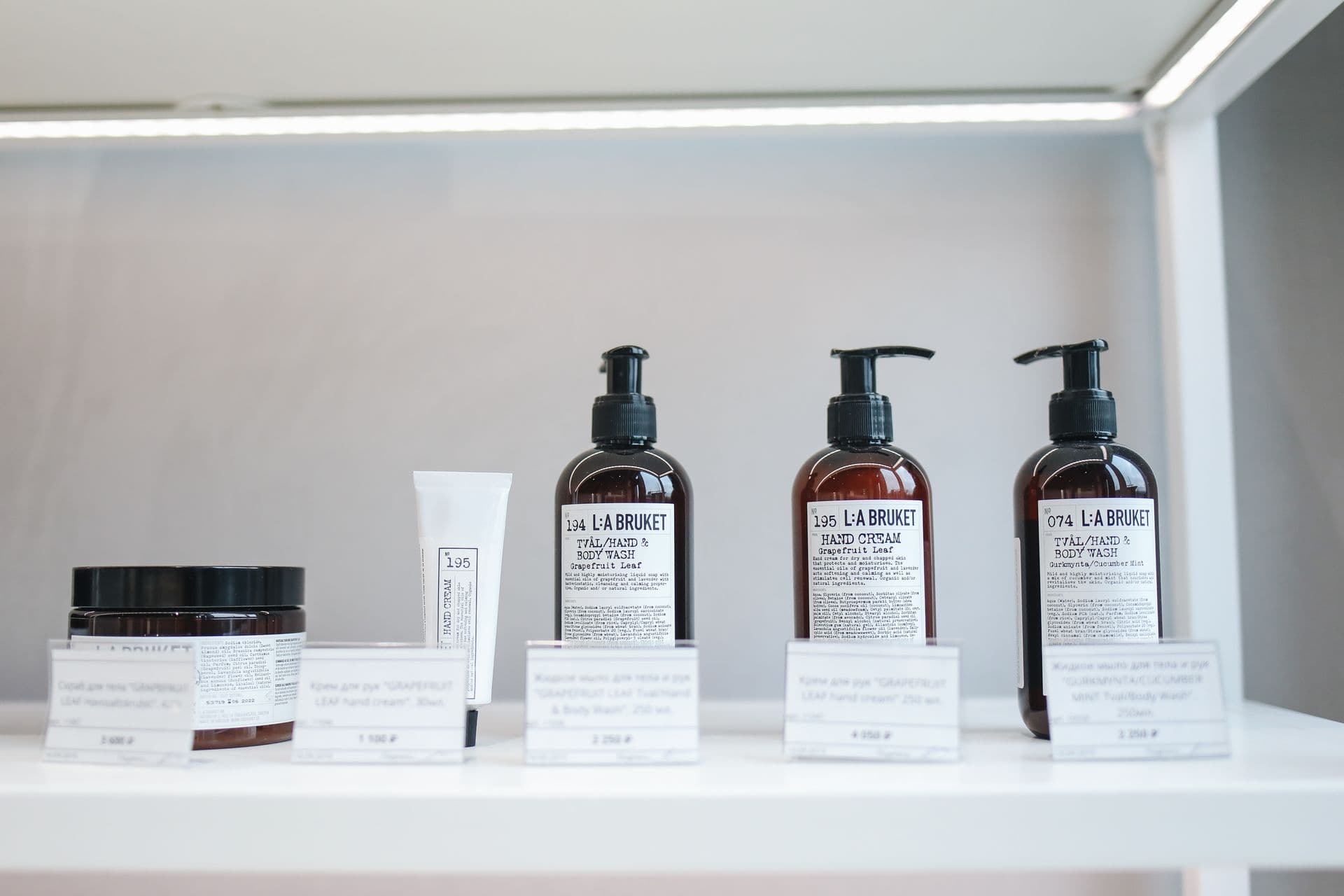
Overview of Vietnamese Liquid Soap and Wash Trade
International procurement teams evaluating Southeast Asian personal care manufacturing track HS heading 340130, which covers organic surface-active products and preparations for washing the skin in liquid or cream form, put up for retail sale. Buyers screening body wash manufacturers in Vietnam read these export records for supply capability, factory throughput, and pricing benchmarks. The category encompasses liquid hand washes, shower gels, and functional cleansing preparations exported directly from Vietnamese production facilities.
Between 2019 and 2023, Vietnamese shipments under HS 340130 displayed notable shifts in aggregate volume and unit realization. From 2019 to 2023 the value is up 16.1%, rising through periods of extreme global demand fluctuations for hygiene products. Over the same multi-year timeline, the export unit value moved from 3.18 USD per kg (3,180 USD per tonne) to 4.60 USD per kg (4,600 USD per tonne), up 44.7%. This upward trajectory in unit pricing provides institutional buyers with critical baseline data regarding production expenditures, raw material inflation, and changing product specifications across export-oriented manufacturers.
Understanding these macro figures allows category managers to assess contract manufacturing stability. Sourcing bath & body works soap equivalents or specialized formulations requires parsing annual export swings, destination concentrations, and cross-border customs differences. This report examines the empirical export data recorded under HS 340130 to assist procurement specialists in structuring supply contracts and assessing supplier capabilities in Vietnam.
Multi-Year Trajectory of Export Values and Volumes
The annual trade flow data reported by Vietnamese customs to UN Comtrade reveals distinct cyclical patterns across the five-year observation window. In 2019, baseline export trade stood at 46.29 million USD, with aggregate shipments reaching 14.54 million kg, yielding an average unit value of 3.18 USD per kg (3,180 USD per tonne). This established the pre-pandemic operating baseline for liquid soap exports from the country.
In 2020, global demand for personal cleansing goods expanded rapidly. Vietnamese exports under HS 340130 climbed to 60.02 million USD, with total shipped volume expanding to 16.71 million kg. The unit value rose to 3.59 USD per kg (3,590 USD per tonne). During this period, the annual performance showed value up 29.7% on 2019, unit value up 12.9%. Factory capacities across Vietnam accommodated massive global orders for basic hand washes and retail skin cleansing lines.
As emergency stockpiling eased, trade adjusted in 2021. Annual exports contracted to 54.8 million USD across 15.52 million kg of product. The unit value adjusted slightly downward to 3.53 USD per kg (3,530 USD per tonne). This performance registered as value down 8.7% on 2020, unit value down 1.7%. Despite this slight contraction, export activity remained substantially above pre-2020 baselines.
The sector rebounded strongly in 2022, setting the series peak in total dollar value. Export trade reached 66.18 million USD, corresponding to 16.27 million kg in physical volume. The realized unit value increased to 4.07 USD per kg (4,070 USD per tonne). On a year-over-year basis, the trade demonstrated value up 20.8% on 2021, unit value up 15.3%. This surge reflected post-pandemic restocking by major retail chains alongside broader global commodity price increases.
In 2023, macroeconomic adjustments, inventory corrections in destination markets, and general consumer spending shifts led to lower total export volumes. Shipments registered at 53.73 million USD across 11.68 million kg. However, unit value continued its ascent, reaching 4.60 USD per kg (4,600 USD per tonne). The annual comparison recorded value down 18.8% on 2022, unit value up 13.0%. The sustained increase in unit value despite lower overall tonnage demonstrates that manufacturers maintained pricing discipline even as aggregate volume dropped.

Destination Markets and Geographic Concentration
Vietnamese liquid wash exports remain concentrated in specific regional corridors. In 2023, total exports reached 53.73 million USD, with a small group of developed Asian economies and Southeast Asian neighbors absorbing the clear majority of trade. Sourcing managers evaluating regional logistics can observe clear delivery clusters across East Asia and ASEAN partner states.
Japan represented the largest single destination among queried markets in 2023, taking 20.53 million USD. This represented 38.2% of the year's total exports and 47.6% of the markets listed here. Japan's stringent technical standards for imported cosmetics and cleansing products make this high market share an important indicator of quality compliance for Vietnamese manufacturing facilities.
Malaysia formed the second-largest destination, recording 11.88 million USD in shipments. This accounted for 22.1% of the year's total exports and 27.5% of the markets listed here. Together, Japan and Malaysia received over 60% of all liquid wash exports leaving Vietnamese ports in 2023, demonstrating high buyer concentration in mature supply chains.
Other ASEAN markets captured intermediate export shares in 2023:
- Philippines received 4.25 million USD, representing 7.9% of the year's total exports, 9.9% of the markets listed here.
- Thailand took 4.11 million USD, accounting for 7.7% of the year's total exports, 9.5% of the markets listed here.
- Cambodia accounted for 1.37 million USD, representing 2.5% of the year's total exports, 3.2% of the markets listed here.
Further destination shipments within the queried group included Korea at 785,631 USD, representing 1.5% of the year's total exports, 1.8% of the markets listed here. Singapore received 228,561 USD, comprising 0.4% of the year's total exports, 0.5% of the markets listed here. These figures cover the specific markets queried rather than every global destination, yet they clearly show that established distribution networks are anchored heavily in the Asia-Pacific region.
Unit Value Trends and Product Mix Dynamics
The trajectory of unit values under HS 340130 provides critical context for buyers structuring contracts with body wash manufacturers for retail liquid formulations. Over the five-year series, export unit value climbed without interruption except for a minor pause in 2021. Unit value moved from 3.18 USD per kg (3,180 USD per tonne) to 4.60 USD per kg (4,600 USD per tonne), up 44.7%.
Several commercial factors explain this steady increase in per-kilogram export pricing:
Formulation Complexity and Active Ingredients
Export lines have shifted progressively from standard bulk commodity hand soaps toward formulated personal care items. Commercial demand has increased for higher-specification goods, including antibacterial soap for body odor, specialty botanical body washes, and gentle surfactant blends. Formulations incorporating active antibacterial agents, cosmetic-grade fragrance oils, and conditioning additives naturally command higher FOB export prices than basic sodium laureth sulfate washes.
Packaging and Presentation Shifts
HS 340130 specifies preparations put up for retail sale. A significant driver of export unit value is the packaging format. Over the 2019 to 2023 period, packaging costs increased globally. Shifts toward custom pump dispensers, specialized multi-layer bottles, and decorative retail-ready packaging elevated the recorded export value per kilogram of finished goods.
Raw Material and Shipping Input Inflation
Base chemical inputs for liquid surfactants, including fatty alcohols, palm oil derivatives, and specialized preservatives, experienced substantial price volatility between 2020 and 2023. Vietnamese export manufacturers adjusted contract pricing to pass through higher ingredient and domestic utility costs, supporting unit values even when volume dropped to 11.68 million kg in 2023.
Comparing Vietnamese Exports and US Customs Import Data
Cross-border trade analysis requires comparing reported export records against destination import declarations. US Census Bureau mirror data provides a clear example of how import documentation diverges from source export filings for HS 340130.
In 2019, the mirror record showed 155,681 USD recorded by US customs, 0.3% of what Viet Nam reported exporting to all markets. At that time, direct Vietnamese liquid soap shipments to the United States represented a minor share of total national output, as domestic producers focused primarily on domestic distribution and regional Asian buyers.
In 2020, US import records surged dramatically to 6.89 million USD recorded by US customs, 11.5% of what Viet Nam reported exporting to all markets. This dramatic spike mirrored immediate North American retail procurement efforts to secure liquid hand washes and sanitizing cleansers from alternative Asian manufacturing hubs during severe domestic inventory shortages.
Following the 2020 peak, US mirror records adjusted downward:
- 2021: 1.73 million USD recorded by US customs, 3.2% of what Viet Nam reported exporting to all markets
- 2022: 1.82 million USD recorded by US customs, 2.7% of what Viet Nam reported exporting to all markets
- 2023: 3.22 million USD recorded by US customs, 6.0% of what Viet Nam reported exporting to all markets
These differences illustrate the structural gap between exporter and importer documentation. Several factors explain why US Customs numbers differ from Vietnamese export reporting:
1. Valuation bases: Export figures are typically recorded on an FOB (Free on Board) basis at Vietnamese ports, whereas US Customs figures capture CIF (Cost, Insurance, and Freight) or customs-assessed values.
2. Shipping time and calendar cutoffs: Container shipments leaving Vietnamese ports in November or December often clear US Customs in January or February of the subsequent calendar year.
3. Routing and transhipment: Goods shipped from Vietnam may be sold through intermediate trading entities in third countries such as Singapore or Hong Kong before final delivery into the United States, occasionally causing misattribution of origin or destination across initial customs declarations.
Strategic Implications for Commercial Sourcing
For procurement directors and private-label brand owners, the trade data under HS 340130 delivers several actionable insights for supplier negotiations and risk management.
First, Vietnam possesses mature, verified compliance capabilities for highly regulated consumer markets. The fact that Japan consistently stands as the leading export market (absorbing 20.53 million USD in 2023, or 38.2% of total exports) proves that Vietnamese contract packagers can maintain strict manufacturing standards, quality management protocols, and formulation consistency. Importers seeking contract manufacturing for personal care lines can leverage facilities that already pass stringent Japanese regulatory audits.
Second, unit cost benchmarking must account for structural price increases. With unit value moving from 3.18 USD per kg (3,180 USD per tonne) to 4.60 USD per kg (4,600 USD per tonne), up 44.7% between 2019 and 2023, buyers cannot expect baseline pricing at pre-2020 levels. Contract negotiations should focus on formula optimization, bulk purchasing of primary packaging, and volume tiering to manage costs.
Third, capacity availability exists for new international buyers. Total export volume moved from a peak of 16.71 million kg in 2020 and 16.27 million kg in 2022 down to 11.68 million kg in 2023. This contraction indicates that Vietnamese production lines have available throughput capacity to accommodate new private-label contracts and export programs without triggering immediate factory bottlenecks.
Limitations of Customs Data for Sourcing Decisions
While customs figures from UN Comtrade and the US Census Bureau offer invaluable high-level market visibility, professional buyers must understand what aggregate HS trade data does not reveal.
Customs data under HS 340130 aggregates all liquid and cream surface-active skin washing products into a single code. It does not differentiate between premium botanical body washes, basic institutional bulk liquid hand soaps, and specialized antibacterial skin cleansers. Consequently, the rising unit value to 4.60 USD per kg (4,600 USD per tonne) in 2023 reflects a blended average rather than a direct price quote for a single standardized formulation.
Furthermore, customs data does not break out specific contract manufacturing relationships, proprietary formulation ingredients, minimum order quantities (MOQs), or lead times. Sourcing specialists must complement trade statistics with direct factory audits, raw material traceability assessments, and pilot batch testing before executing volume supply agreements.
FAQ
What product classifications are included under HS 340130 for Vietnamese exports?
HS 340130 covers organic surface-active products and preparations for washing the skin in liquid or cream form, packaged for retail sale. This encompasses liquid hand soaps, liquid body washes, shower gels, and specialized formulations such as antibacterial cleansers.
How did unit pricing for Vietnamese liquid soap exports evolve between 2019 and 2023?
Export unit values rose by 44.7% across the series, shifting from 3.18 USD per kg (3,180 USD per tonne) in 2019 to 4.60 USD per kg (4,600 USD per tonne) in 2023, reflecting increasing formulation complexity and rising base input costs.
Which export destinations represent the largest share of Vietnam's liquid body wash shipments?
In 2023, Japan represented the largest destination among queried markets at 20.53 million USD (38.2% of total exports), followed by Malaysia at 11.88 million USD (22.1%), the Philippines at 4.25 million USD (7.9%), and Thailand at 4.11 million USD (7.7%).
Why do US Customs import records differ from Vietnamese reported exports under HS 340130?
Discrepancies between Vietnamese reported export data and US Customs import records arise due to customs valuation differences (FOB versus CIF), shipping lead times across calendar year-ends, and intermediate transhipment hubs in third countries.
Read next
Related: our product range